

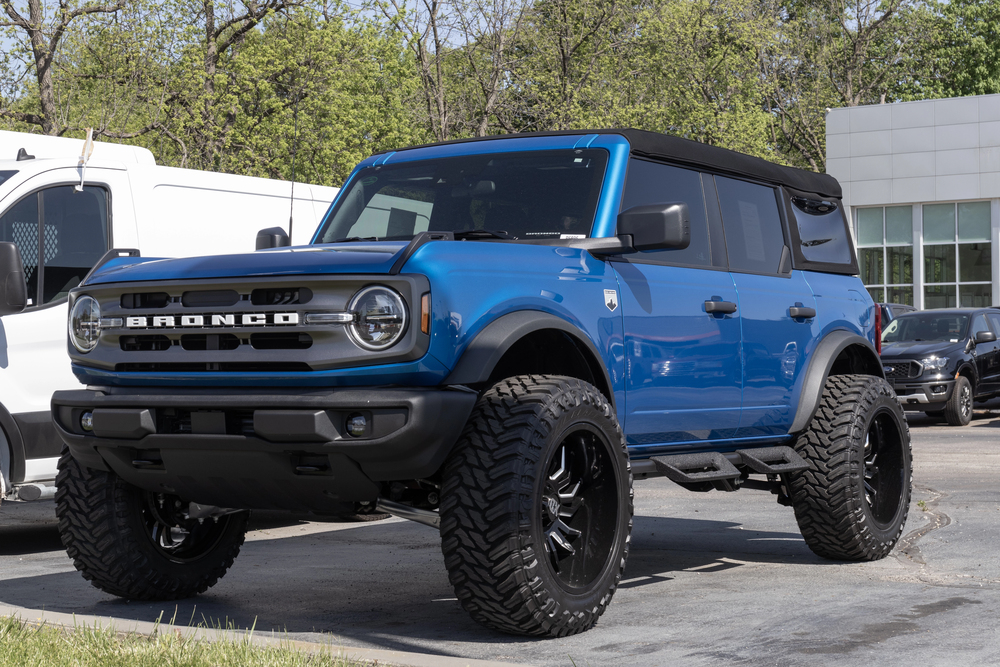
Wheel and tire choice is the single decision that affects the most other parts of a Bronco build. Get the size wrong and you’re fighting rubbing, gearing, and suspension clearance for the rest of the project. Here’s how the factory setup works, what changes as you size up, and where a lift becomes necessary instead of optional.
What Wheel Specs Does the Factory Bronco Use?
Every sixth-generation Bronco runs a 6×139.7mm bolt pattern with a 93.1mm hub bore, standard across trims. Factory wheel offset ranges from roughly +30mm to +55mm depending on trim and wheel size, with factory diameters spanning 16 to 18 inches. That bolt pattern is a common one in the off-road SUV world, which is part of why the Bronco has such a deep aftermarket wheel catalog to choose from.
What Tire Size Does the Sasquatch Package Come With?
The Sasquatch package replaces standard rubber with 35-inch LT315/70R17 mud-terrain tires, mounted on 17-inch beadlock-capable wheels finished in matte black. Beadlock capability lets you air down tires to very low pressure on the trail without the tire separating from the wheel, which widens the contact patch on sand, mud, or rock rather than bouncing over it.
Sasquatch also brings the HOSS suspension system, with position-sensitive Bilstein shocks, and delivers up to 11.6 inches of ground clearance on two-door models. That combination, tires plus suspension plus locking front and rear axles, is why Sasquatch-equipped Broncos handle 35-inch tires from the factory without any aftermarket modification at all.
What’s the Difference Between 33-Inch, 35-Inch, and 37-Inch Tires?
33-inch tires fit most non-Sasquatch trims, including the base model, without any modification.
35-inch tires come standard with Sasquatch, Wildtrak, and Everglades trims. On other trims, a 35-inch tire often works after removing the factory crash bars, or with a mild leveling kit for extra clearance margin.
37-inch tires almost always require a suspension lift and additional modification. Without extra clearance, 37s tend to rub against steering and suspension components when turning or when the suspension compresses on rough terrain.
The Bronco Raptor runs its own factory tire spec: 37×12.5R17 BF Goodrich All-Terrain KO2, built into the vehicle’s wider track and factory suspension from the start rather than added on afterward.
What Aftermarket Wheel Sizes Work Best on a Bronco?
17×9 wheels in a +1 to -12mm offset range are the most common aftermarket choice for trail-focused builds, pairing well with 33 to 35-inch tires like a 285/70R17 or 315/70R17. Going wider or more negative in offset increases stance and tire poke, but it also increases the chance of rubbing without other clearance modifications. Some owners run 20-inch wheels instead, generally for a more street-oriented look, though 17-inch remains the more common trail choice because of the wider tire selection available in that size.
Do You Need a Lift for Bigger Tires?
Depends on the size and the starting trim. A 35-inch tire on a Sasquatch-equipped Bronco needs no lift at all, since the factory package already accounts for it. A 35-inch tire on a non-Sasquatch trim may need a small leveling kit rather than a full lift. A 37-inch tire, on almost any trim, needs a real suspension lift plus fender or bumper modification to avoid rubbing. As tire size climbs, the lift requirement stops being optional and starts being structural to the build.
How Do Wheel and Tire Choices Affect Gearing and Fuel Economy?
Larger, heavier tires change the vehicle’s effective gear ratio, since a taller tire covers more ground per wheel rotation. That can make acceleration feel softer and can hurt fuel economy, particularly with 37-inch tires, which run in the 15 to 18 mpg range depending on the rest of the build. Regearing the differentials brings the drivetrain back to its intended performance and is a common addition on 37-inch builds, though it’s often skipped on 35-inch setups where the difference is smaller.
Where Should You Buy Wheels and Tires for a Custom Build?
Plenty of owners order wheels from retailers like Hardrock Offroad or Hulk Offsets and handle tire mounting and installation separately, sometimes at a different shop entirely. That works, but it puts the responsibility for correct fitment, offset, and regearing needs on the owner to coordinate across multiple vendors.
We handle wheel and tire selection as part of the full build, factoring in suspension, gearing, and fender clearance together rather than as separate purchases. Every completed build goes through a full road test before it’s approved for sale, checking that the wheel and tire setup performs correctly with everything else on the vehicle. Browse our lineup of custom Broncos to see wheel and tire packages built in from the start.
Ready to Spec Your Wheel and Tire Setup?
Start with Build Your Own to plan wheels and tires alongside suspension and lift decisions, or browse current inventory for finished examples. Every completed build ships nationwide, standard or expedited in seven days or less, through Nationwide Shipping.
Frequently Asked Questions
What tire size does the Sasquatch package come with?
35-inch LT315/70R17 mud-terrain tires on 17-inch beadlock-capable wheels, no aftermarket modification needed.
Do I need a lift for 35-inch tires?
Not if your Bronco already has the Sasquatch package. On other trims, a small leveling kit is often enough.
Do I need a lift for 37-inch tires?
In almost every case, yes, along with fender or bumper modification to prevent rubbing.
Does a bigger tire hurt fuel economy?
Yes, generally. Larger, heavier tires change the effective gear ratio and increase rolling resistance, with 37-inch setups seeing the biggest impact.
Should I regear after upgrading to bigger tires?
Often worthwhile on 37-inch builds to restore the drivetrain’s intended performance. Less commonly needed on 35-inch setups.
Connect with us

