
Blog / Car Care

Blog

All Car Care Customizing Your Ride Car Buying Off-Road Essentials Top Scenic Routes for your Bronco or Jeep Join the Adventure Sunshine Cruisin' Exploring Florida's Scenic Views The Allure of the Open Road
Tires For Custom Bronco: Best Options For On- And Off-Road Performance

Best Wheel and Tire Setups for a Custom Bronco

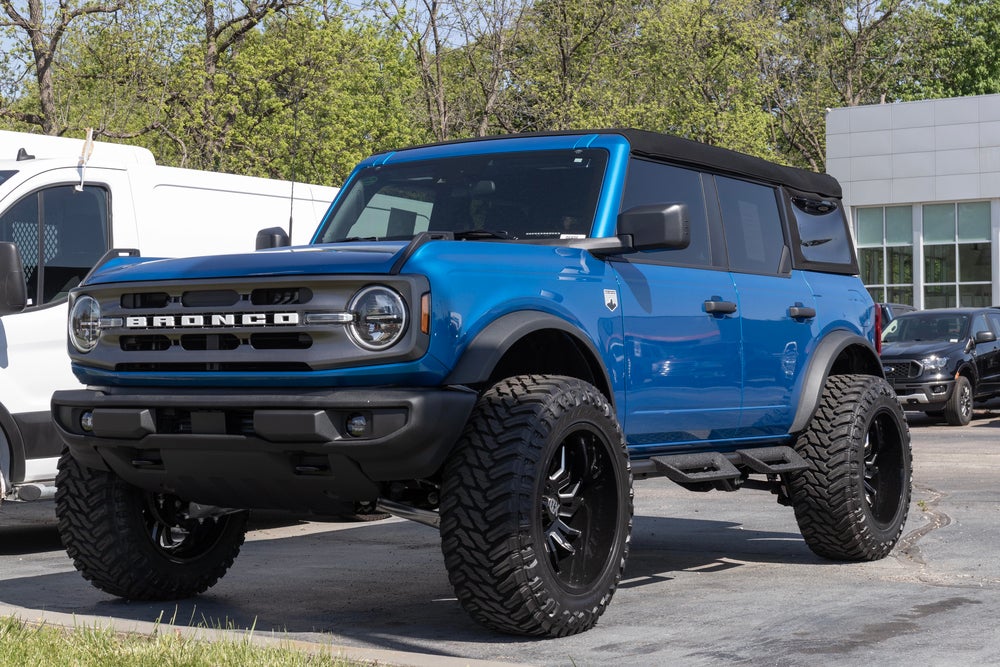
Wheel and tire choice is the single decision that affects the most other parts of a Bronco build. Get the size wrong and you're fighting rubbing, gearing, and suspension clearance for the rest of the project. Here's how the factory setup works, what changes as you size up, and where a lift becomes necessary instead of optional. What Wheel Specs Does the Factory Bronco Use? Every sixth-generation Bronco runs a 6x139.7mm bolt pattern with a 93.1mm hub bore, standard across trims. Factory wheel offset ranges from roughly +30mm to +55mm depending on trim and wheel size, with factory diameters spanning 16 to 18 inches. That bolt pattern is a common one in the off-road SUV world, which is part of why the Bronco has such a deep aftermarket wheel catalog to choose from. What Tire Size Does the Sasquatch Package Come With? The Sasquatch package replaces standard rubber with 35-inch LT315/70R17 mud-terrain tires, mounted on 17-inch beadlock-capable wheels finished in matte black. Beadlock capability lets you air down tires to very low pressure on the trail without the tire separating from the wheel, which widens the contact patch on sand, mud, or rock rather than bouncing over it. Sasquatch also brings the HOSS suspension system, with position-sensitive Bilstein shocks, and delivers up to 11.6 inches of ground clearance on two-door models. That combination, tires plus suspension plus locking front and rear axles, is why Sasquatch-equipped Broncos handle 35-inch tires from the factory without any aftermarket modification at all. What's the Difference Between 33-Inch, 35-Inch, and 37-Inch Tires? 33-inch tires fit most non-Sasquatch trims, including the base model, without any modification. 35-inch tires come standard with Sasquatch, Wildtrak, and Everglades trims. On other trims, a 35-inch tire often works after removing the factory crash bars, or with a mild leveling kit for extra clearance margin. 37-inch tires almost always require a suspension lift and additional modification. Without extra clearance, 37s tend to rub against steering and suspension components when turning or when the suspension compresses on rough terrain. The Bronco Raptor runs its own factory tire spec: 37x12.5R17 BF Goodrich All-Terrain KO2, built into the vehicle's wider track and factory suspension from the start rather than added on afterward. What Aftermarket Wheel Sizes Work Best on a Bronco? 17x9 wheels in a +1 to -12mm offset range are the most common aftermarket choice for trail-focused builds, pairing well with 33 to 35-inch tires like a 285/70R17 or 315/70R17. Going wider or more negative in offset increases stance and tire poke, but it also increases the chance of rubbing without other clearance modifications. Some owners run 20-inch wheels instead, generally for a more street-oriented look, though 17-inch remains the more common trail choice because of the wider tire selection available in that size. Do You Need a Lift for Bigger Tires? Depends on the size and the starting trim. A 35-inch tire on a Sasquatch-equipped Bronco needs no lift at all, since the factory package already accounts for it. A 35-inch tire on a non-Sasquatch trim may need a small leveling kit rather than a full lift. A 37-inch tire, on almost any trim, needs a real suspension lift plus fender or bumper modification to avoid rubbing. As tire size climbs, the lift requirement stops being optional and starts being structural to the build. How Do Wheel and Tire Choices Affect Gearing and Fuel Economy? Larger, heavier tires change the vehicle's effective gear ratio, since a taller tire covers more ground per wheel rotation. That can make acceleration feel softer and can hurt fuel economy, particularly with 37-inch tires, which run in the 15 to 18 mpg range depending on the rest of the build. Regearing the differentials brings the drivetrain back to its intended performance and is a common addition on 37-inch builds, though it's often skipped on 35-inch setups where the difference is smaller. Where Should You Buy Wheels and Tires for a Custom Build? Plenty of owners order wheels from retailers like Hardrock Offroad or Hulk Offsets and handle tire mounting and installation separately, sometimes at a different shop entirely. That works, but it puts the responsibility for correct fitment, offset, and regearing needs on the owner to coordinate across multiple vendors. We handle wheel and tire selection as part of the full build, factoring in suspension, gearing, and fender clearance together rather than as separate purchases. Every completed build goes through a full road test before it's approved for sale, checking that the wheel and tire setup performs correctly with everything else on the vehicle. Browse our lineup of custom Broncos to see wheel and tire packages built in from the start. Ready to Spec Your Wheel and Tire Setup? Start with Build Your Own to plan wheels and tires alongside suspension and lift decisions, or browse current inventory for finished examples. Every completed build ships nationwide, standard or expedited in seven days or less, through Nationwide Shipping. Frequently Asked Questions What tire size does the Sasquatch package come with? 35-inch LT315/70R17 mud-terrain tires on 17-inch beadlock-capable wheels, no aftermarket modification needed. Do I need a lift for 35-inch tires? Not if your Bronco already has the Sasquatch package. On other trims, a small leveling kit is often enough. Do I need a lift for 37-inch tires? In almost every case, yes, along with fender or bumper modification to prevent rubbing. Does a bigger tire hurt fuel economy? Yes, generally. Larger, heavier tires change the effective gear ratio and increase rolling resistance, with 37-inch setups seeing the biggest impact. Should I regear after upgrading to bigger tires? Often worthwhile on 37-inch builds to restore the drivetrain's intended performance. Less commonly needed on 35-inch setups.
Must-Have Custom Bronco Accessories

The right accessories depend entirely on how you actually use your Bronco. A daily driver needs different gear than a weekend trail rig, and a rig headed into real backcountry needs more than either one. Here's what matters most, organized by what it actually does for your build. What Accessories Protect a Bronco Off-Road? Protection comes before performance. These are the parts that keep a build from getting damaged before it ever gets to show off what it can do. Skid plates. Steel plating under the engine, transmission, and fuel tank, protecting against rock strikes and trail debris. Rock sliders. Steel or aluminum tubing that runs along the rocker panels, protecting the body during technical rock crawling. Many double as a step for easier entry on a lifted build. Steel front bumpers with winch mounts. A heavy-duty steel bumper adds recovery points and a winch mount in addition to protection, replacing the factory bumper's more limited capability. Fender flares and inner fenders. Protect against debris kicked up by larger tires and cover the extra clearance that comes with a lift. Rock sliders, skid plates, and upgraded tires tend to deliver the most noticeable improvement relative to their cost. Bumpers, roof racks, and lighting matter, but they're usually the next priority after the protective basics are covered. What Recovery Gear Should Every Custom Bronco Carry? A winch is the centerpiece, typically in the 10,000 to 12,000 pound range for a Bronco-sized build, allowing controlled self-recovery without relying on another vehicle. That matters most for solo trail use, where waiting on another vehicle isn't always an option. Round out a recovery kit with recovery boards, a set of rated recovery straps, D-ring shackles, and a Hi-Lift jack. Upgraded tires and a lift kit without recovery gear is an incomplete build. Sooner or later, every serious off-road Bronco gets stuck, and the recovery gear is what gets it moving again. What Lighting Upgrades Make the Biggest Difference? LED light bars mounted on the roof or bumper provide wider, brighter forward illumination than factory halogen lighting, particularly valuable for night trail driving or low-visibility conditions. Auxiliary fog lights with spot or flood beam patterns add control over field of vision in misty or dusty conditions where standard headlights fall short. Lighting upgrades are one of the more practical additions on this list. They're a safety upgrade as much as a style one. What Interior Accessories Improve Daily Usability? Interior accessories matter just as much as exterior ones, especially for a Bronco that sees regular daily use in addition to trail time: Waterproof floor liners. Standard on most builds given the Bronco's removable doors and open-air configuration. Seat covers. Protect factory upholstery from mud, sand, and UV exposure over time. MOLLE storage panels. Modular attachment points for organizing gear on interior door panels and cargo areas. Cargo organizers. Purpose-built for the Bronco's rear cargo area, keeping recovery gear and equipment from sliding around on rough terrain. Do Roof Racks and Rooftop Tents Make Sense for Every Build? Not for every build, but for many. A roof rack adds real cargo capacity for camping gear, kayaks, or bikes, and it's a common add-on for buyers planning overland-style trips. A rooftop tent takes that further, turning the vehicle itself into a base camp. Neither makes sense on a build focused purely on daily driving or occasional light trail use. Both make a lot of sense on a build planned around overlanding or extended trips. Match the accessory to how the vehicle actually gets used, not to what looks good in photos. How Do Suspension Upgrades Relate to Accessory Choices? Suspension isn't technically an accessory, but it's the upgrade that makes several accessories on this list work correctly together. Once you're running 35-inch or larger tires, a steel bumper, a winch, and camping gear, added weight starts affecting ride height, tire clearance, and component wear. A lift kit isn't just about stance at that point. It's what keeps the rest of the build functioning the way it's supposed to. We evaluate suspension needs as part of the full accessory conversation, not as a separate decision made after everything else is bolted on. Where Do These Parts Come From, and Who Installs Them? A lot of Bronco owners piece a build together themselves, ordering parts individually from brands like DV8 Offroad, Hooke Road, or Havoc Offroad and arranging installation with a separate local shop, sometimes more than one. That approach works, but it means coordinating fitment, timelines, and labor across multiple vendors, and no single party is responsible for how the finished build performs as a whole. We handle accessory selection and installation in-house, as part of a complete build rather than a parts list. That means one point of contact, one install timeline, and one road test at the end that evaluates the vehicle as a whole system, not just each part in isolation. Browse our full lineup of custom Broncos to see finished builds with accessories integrated from the start. Ready to Build Out Your Accessory List? Start with Build Your Own to spec accessories alongside the rest of your build, or browse current inventory to see finished examples. Every completed build ships nationwide, standard or expedited in seven days or less, through Nationwide Shipping. Frequently Asked Questions What's the single most important accessory for off-road use? Rock sliders and skid plates deliver the most protection relative to cost, and most builds start there before adding bumpers, racks, or lighting. What size winch does a Bronco need? Most builds use a winch in the 10,000 to 12,000 pound range, sized to the vehicle's weight and intended trail use. Do accessories affect fuel economy? Some do. Larger tires, steel bumpers, and roof racks add weight and rolling resistance. We help select parts that balance capability against that tradeoff. Should I buy parts separately and have them installed elsewhere? You can, but coordinating multiple vendors and installers adds complexity. We handle accessory selection and installation together as part of one build. Do I need a lift kit if I'm adding accessories? Depends on scope. Larger tires, heavier bumpers, and a winch typically shift a lift from optional to necessary for proper clearance and ride quality.

Loving Your Car When The Swirl Is Gone

Get The Touchless Car Wash Experience At Home One of the reasons why touchless car washes are so popular is because they’re gentle on your car’s paint. You don’t have to worry about the harsh chemicals and abrasive brushes that can damage your vehicle’s finish. Many professional car detailers will recommend touchless car washes for people who want to keep their car’s paint in pristine condition. If you have a new car, or if you just want to keep your car looking its best, a touchless car wash is a great option. However if you want to take it a step further and get the full touchless car wash experience, you can replicate it at home with a few simple supplies. Best of all you'll get no more swirls, water spots, or other imperfections that come from traditional car washing methods. What You'll Need. A quality pressure washer A foam cannon (a device that mixes car wash soap, water, and air to generate thick suds) PH Neutral car soap Microfiber wash and drying cloths Leaf blower or other high power Car dryer Let's get started: Avoid washing your car in direct sunlight or in the height of the day. Instead park your car in a shaded area or choose to wash your car on a cloudy day if possible. This helps prevent water spots from forming on your car’s paint. Thoroughly rinse the vehicle using a pressure washer working from top to bottom. This should remove any loose dirt and grime. Next, mix your car soap with water in the foam cannon following the manufacturer’s instructions. Apply the suds to your car using the foam cannon, starting from the top and working your way down. Let the suds stay on the car for a few minutes to loosen any remaining dirt. Rinse the suds off your car using the pressure washer, working from the top down. Use a leaf blower or other high powered car dryer to remove any water from nooks and crannies where water could pooled and cause rust or other damage. Finally, use a clean microfiber cloth to wipe down the car and remove any water spots. And there you go! Now you know how to wash your car like a professional without ever having to touch it. This method is safe for all paint types and will leave your car’s paint looking shiny and new.

Charged As An Accessory To Driving

Top Car Accessories Every Owner Should Try As a car owner, you are constantly looking for ways to improve your driving experience and make your car more comfortable and efficient. One way to do this is to invest in some top accessories that can help you get the most out of your car. Here are some of the best accessories every car owner should try: Portable Battery Charger & Jumper Box If you are someone who is always on the go, a portable battery charger and jumper box is an absolute must. This handy accessory will allow you to charge your car battery on the go, so you never have to worry about being stranded with a dead battery. It is also great for jump starting your car if it ever dies while you are out and about. Mirror Dash Cam A mirror dash cam is a great way to improve your safety while driving. It allows you to see what is happening behind you without taking your eyes off the road. There are models that will record both the front and rear view , so you can get a complete picture of what is going on around you. This can be invaluable evidence if you are ever in an accident. Unfortunately there are people who intentionally cause accidents so that they can make an insurance claim. A dashboard camera will help you prove that you were not at fault if this ever happens to you. Cigarette Lighter Splitter If you are constantly using your cigarette lighter to charge your phone or power other devices, then a cigarette lighter splitter is a must. This will allow you to plug in multiple devices at once without having to unplug something else. This can be really useful if you are using your navigation system and need to keep your phone charged at the same time. Frost Guard Windshield Mats If you live in an area where it gets cold in the winter, then you know how frustrating it is to scrape ice off your windshield. Frost guard windshield mats are a great way to keep your windshield clear and prevent ice from building up. You can find mats that fit over your entire windshield or just the part that gets iced over. Some models come with mirror pockets so that you protect those from frost and snow build up OBD Scanner Tool An OBD scanner tool is a must for any car owner. It allows you to read the diagnostic codes that are stored in your car’s computer. This can be really helpful if you are trying to figure out why your check engine light is on. You can also use it to clear codes and reset your engine light if it comes on unnecessarily. Look for ones that have a phone app so that you can read the codes on your phone. Remote Starter Phone App If you have a remote starter, then you know how convenient it is to be able to start your car from inside your house. But what if you could start your car from anywhere? With a remote starter phone app, you can do just that. Many features include allowing others to use your vehicle as long as they have the phone app. This can be great for when your spouse or kids need to use the car but you are not home. Just make sure to set up some limits so that you don’t run up your car’s mileage too much. These are only a few of the great accessories available to car owners. With so many options out there, it is easy to find something that will improve your driving experience. So don’t wait, start shopping for some new accessories today. Your car will thank you for it. Now that you have a list of wish list accessories it might be time to get a new car to put them in! After all, what better way to show off your new toys than in a stylish set of wheels? Check out our latest models today and find the perfect one for you.

Road Trip Anyone

You Might Go On Vacation But Car Maintenance Never Should As we enter the dog days of Summer, family vacations and long road trips become top priorities. But even if you're taking a break from your regular routine, car maintenance should never be put on the back burner. Getting Prepared To Go Before hitting the open road, be sure to give your car a once-over to make sure everything is in working order. This includes checking your engine oil, coolant levels, tires, and brakes. If you're not comfortable performing these checks yourself, or if you notice anything out of the ordinary, it's always best to take your car to a professional for a thorough inspection. Once you're on the road, be sure to keep an eye on your vehicle's gauges and warning lights. If anything pops up, don't ignore it! Pull over at the next safe opportunity and check out what's going on. Don't Sweat or Let The Small Things Bug You Summer is also a good time to check other items and systems in your car such as the air conditioning, wiper blades, and washer fluid levels. These are all things that you'll be using frequently during the hotter months, so it's important to make sure they're in good working order. You never know when you might be driving and you get a heavy downpour or you have to clear away some bugs, so it's always best to be prepared. Always Have A Backup Plan In general we have become used to using the GPS system on our phones to get us where we need to go. But what happens if you're driving in an unfamiliar area and your phone dies or you lose service? That's why it's always a good idea to have a physical map on hand as well as a backup plan for directions. It might seem old-fashioned, but there's nothing worse than being stranded in the middle of nowhere with no way to get home. If you're going to be driving in unfamiliar territory or in remote areas, be sure to let someone know your route and estimated time of arrival. That way, if something does happen, someone will know where to start And last but not least, always remember to drink plenty of water and take breaks often when driving during the summer months. Heat exhaustion is no joke, and it can happen to anyone. So stay hydrated, stay alert, and most importantly, enjoy your summer

Contact Us

Fill out this form below and we'll contact you shortly
*Required Fields