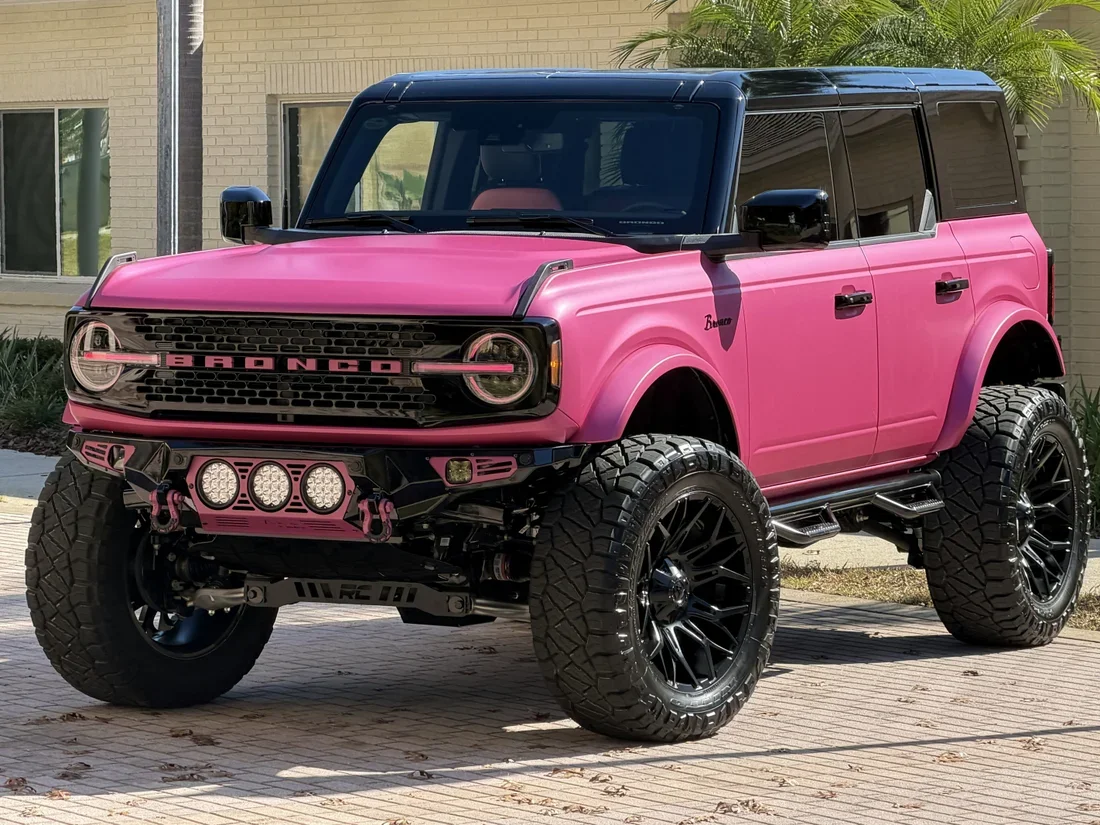
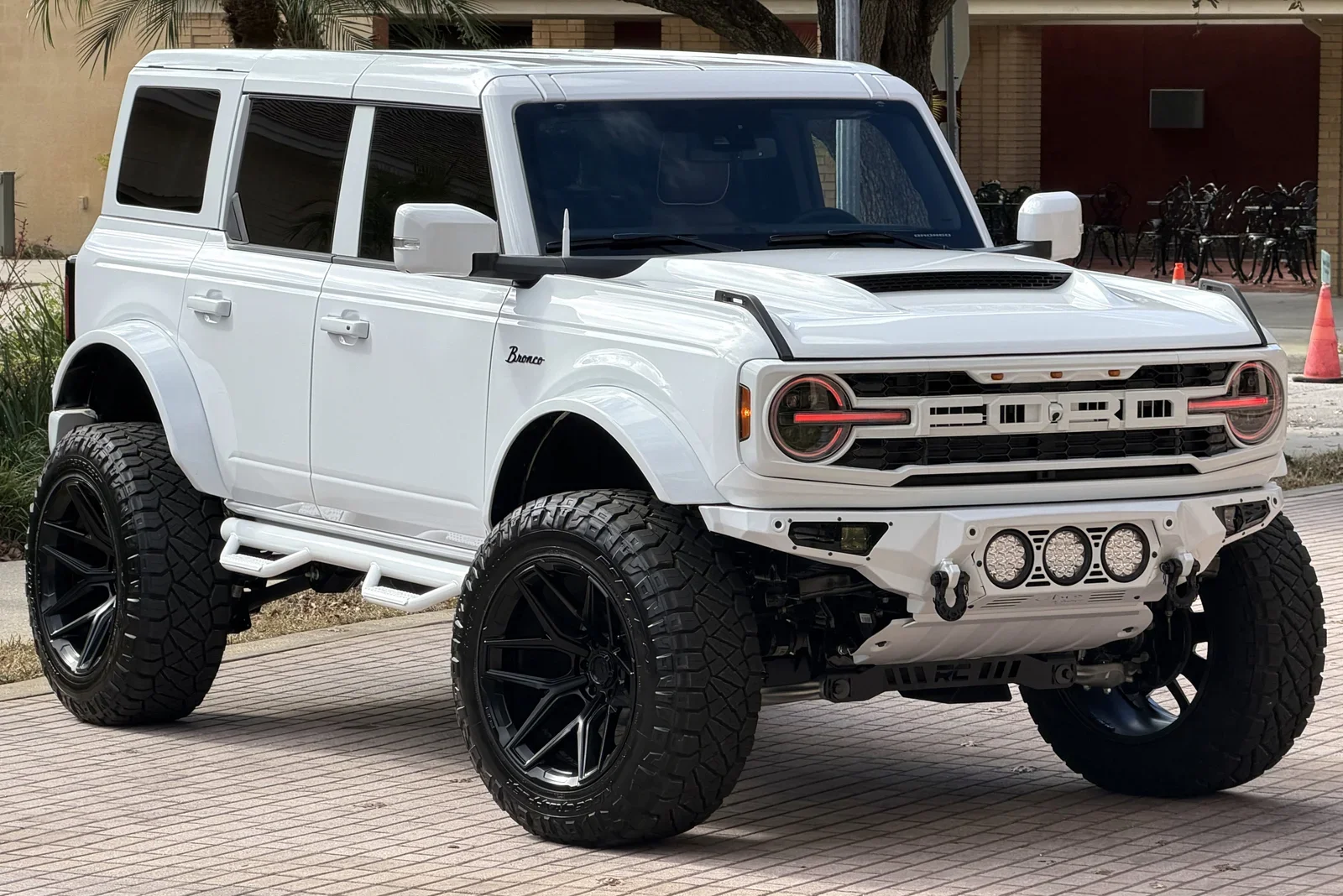
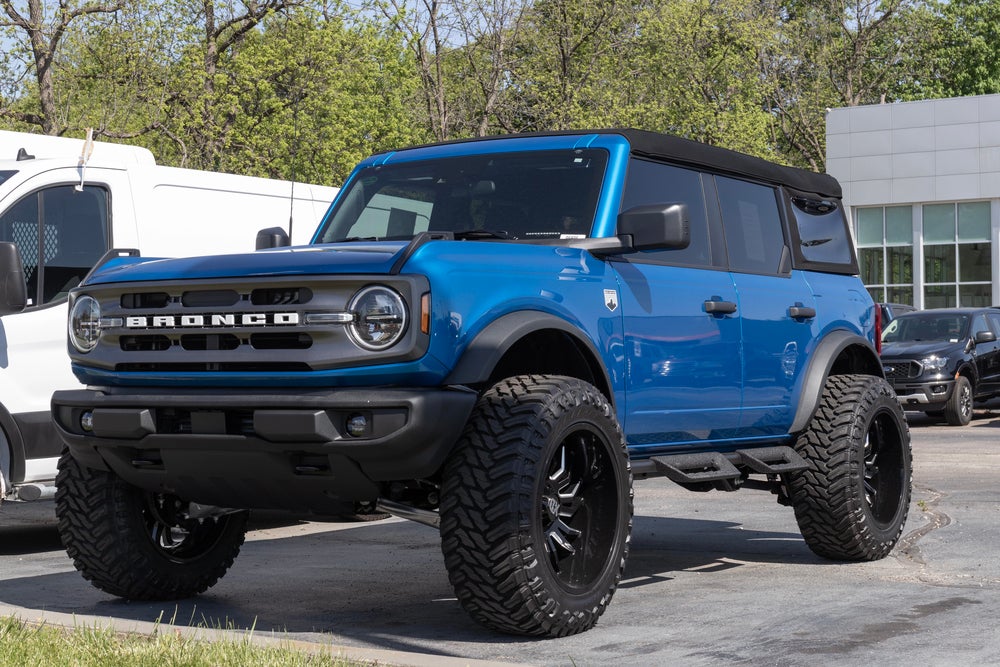
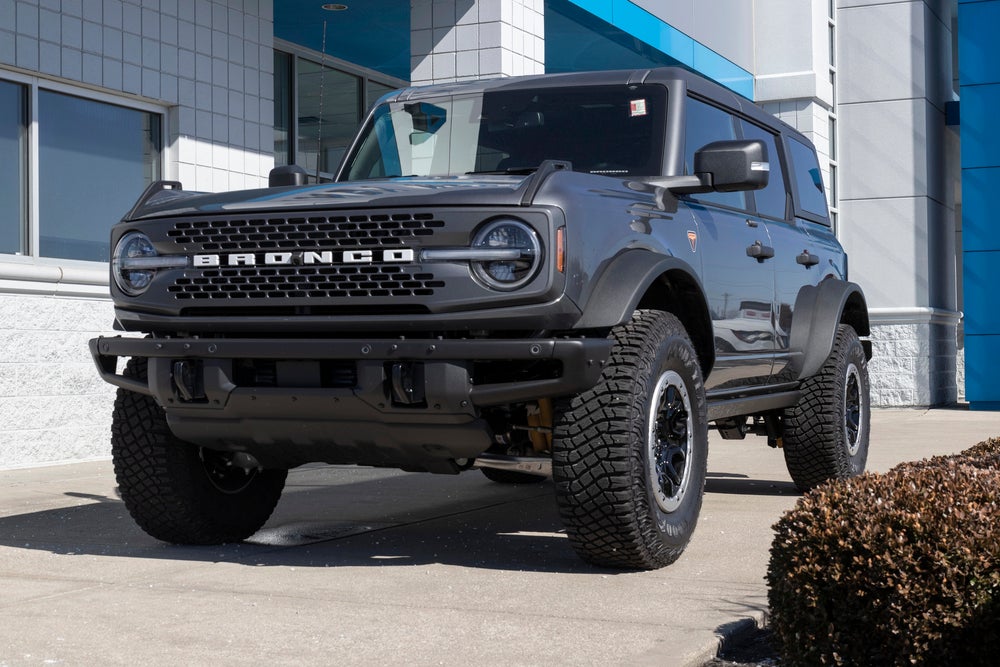
Most people searching for a custom Ford Bronco are really asking a narrower question: which kind of build do I actually want? There are four answers, and they are not close substitutes. A lifted new-generation Bronco, a Raptor build, a vintage restomod, and a color-and-finish build start from different vehicles, cost different money, and drive differently. Here is how to tell them apart before you spend. Every build below is something we do in-house. You can see finished examples on our custom Ford Bronco page. Key Takeaways Four build paths exist: lifted new-generation, Raptor, vintage restomod, and finish-focused. Pick by how you plan to use the truck, not by photos. Engine choice sets your ceiling. The 2.3L EcoBoost makes 300 hp on premium fuel, the 2.7L V6 makes 330 hp, and the Raptor's 3.0L V6 makes 418 hp and 440 lb-ft. A vintage restomod is a different market entirely. Recognized shops regularly sell builds between $150,000 and $300,000-plus. Lift height is the one decision that affects everything else: tire size, driveline angles, alignment, and how the truck feels at 70 mph. Ask any builder for an itemized parts list before you pay a deposit. If they will not produce one, that tells you what you need to know. What Are the Four Types of Custom Ford Bronco Builds? They are the lifted new-generation build, the Raptor build, the vintage restomod, and the finish-focused build. Each one starts from a different base vehicle and solves a different problem. Build type Starts from Best for Typical scope Lifted new-generation Current Bronco, usually Outer Banks or Badlands Daily driving with real trail capability Suspension, wheels and tires, bumpers, lighting, interior Raptor build Bronco Raptor High-speed desert and washboard roads Wheels and tires, armor, lighting, cosmetic work Vintage restomod 1966 to 1977 Bronco Collectors, weekend driving, events Frame-up restoration plus modern drivetrain and brakes Finish-focused Any current Bronco Buyers who want the look without the mechanical rework Paint, wrap, two-tone, color-matched trim, wheels Lifted New-Generation Builds This is the volume category, and for good reason. You get a truck with a factory warranty, modern safety equipment, and parts availability, then you fix the two things people actually complain about: ride height and tire size. Most of our builds live here. The base engine is the 2.3L EcoBoost four-cylinder at 275 hp and 315 lb-ft on regular fuel, or 300 hp and 325 lb-ft on premium. Step up to the 2.7L twin-turbo V6 and you get 315 hp and 410 lb-ft on regular, 330 and 415 on premium. The V6 is the one to have if you plan to run 35s or larger, because heavier tires eat low-end response. Raptor Builds The Raptor arrives from Ford already sorted. It has the 3.0L twin-turbo V6 at 418 hp and 440 lb-ft, a wider track, and suspension built for speed over rough ground. It also tows 4,500 pounds against 3,500 for a standard Bronco. Customizing a Raptor is mostly about wheels, tires, armor, lighting, and finish work, not about fixing anything. See current builds on our custom Bronco Raptor page. Vintage Restomods A restomod keeps the 1966 to 1977 body and replaces almost everything underneath. Modern V8, modern transmission, disc brakes, updated steering and suspension. It drives like something you can actually use instead of something you baby. This is the build people fall in love with at shows and then misjudge on price. More detail is on our custom vintage Bronco page. Finish-Focused Builds Sometimes the truck is already right and only the look is wrong. Custom paint, two-tone work, matte or satin finishes, color-matched bumpers and fenders, and a wheel change will transform a stock Bronco without touching the driveline. Our Pink Bronco builds are the most requested example, and we cover the full range in Ford Bronco Colors and Custom Finishes. Do not pick a build type from a gallery photo. A blacked-out 37-inch build and a mild 2-inch build can look nearly identical in a three-quarter shot and drive nothing alike. How Should You Choose Between a New-Generation Build and a Vintage Restomod? Choose the new-generation build if the Bronco will be driven regularly, and the restomod if it will be driven for pleasure. That single question settles it more often than budget does. A current Bronco comes with a 3-year/36,000-mile basic warranty and a 5-year/60,000-mile powertrain warranty. Cosmetic work and most bolt-on modifications leave the powertrain coverage alone. Suspension and driveline changes are a separate conversation, and an honest builder will have it with you before the work starts rather than after. A restomod has no warranty in that sense. What it has instead is a rebuilt vehicle whose full history you know, if the shop documents the build properly. Ask for photos of the frame and body work before paint, not just the finished truck. Any shop that restores Broncos seriously will have them. Do not buy a restomod expecting current-Bronco road manners. Even the best ones are louder, slower to stop, and more physical to drive. That is part of the appeal, but it should not be a surprise. How Should You Spec a Lifted Bronco That Still Drives Well on the Highway? Match the lift to the tire, keep the lift modest, and do the alignment and driveline work rather than skipping it. Most bad-riding lifted Broncos are not badly built. They are badly matched. Step 1: Pick the Tire Size First Tire diameter drives everything else. Decide whether you want 33s, 35s, or 37s, then let that set the lift. Going the other direction, picking a lift height and then finding tires to fill the gap, is how people end up with rubbing, poor geometry, and a truck that wanders. Step 2: Keep the Lift as Low as the Tire Allows A 2-inch to 3-inch lift clears 35s on most Bronco trims and keeps the suspension working close to how Ford designed it. Every inch past that costs you something in steering feel and stability. If the goal is presence rather than clearance, a smaller lift with a wider wheel offset often looks better anyway. Step 3: Account for the Weight You Are Adding Steel bumpers, a winch, sliders, and 37s add real mass in the worst possible places. Springs and shocks should be specified for the finished weight of the truck, not the showroom weight. This is the step budget builds skip, and it is why those trucks ride poorly a year later. Step 4: Align It After the Parts Go On, Then Drive It Every build we finish gets aligned and road tested before it is photographed or listed. A build that has never been driven above 45 mph has not been tested. Ask whoever is building your Bronco what their road test looks like. Do not run a big lift on stock-length brake lines, driveshafts, or bump stops. The parts that fail are never the ones in the photos. How Much Should You Expect a Custom Ford Bronco to Cost? New-generation builds start from the trim price and climb with scope, while vintage restomods are priced from a completely different baseline. Treating them as two versions of the same math is the most common budgeting mistake buyers make. On the new-generation side, the 2026 Bronco starts around $40,795 for the Base before destination. Big Bend sits near $41,790, Outer Banks near $48,685, Badlands near $49,385, Heritage near $52,120, and the Raptor near $80,990. Your build cost is that number plus parts and labor. A wheel and tire package with a modest lift is one tier. Full armor, lighting, interior, and custom paint is another. Vintage is a different market. Average sale prices for first-generation Broncos across all conditions run in the mid-$80,000s, but that figure includes rust-bucket projects. Professional restomod builds from the recognized names routinely sell between $150,000 and $300,000-plus. Classic Recreations lists full custom restorations starting at $224,900. ICON's V8 BR series starts at $299,000. Kindred Motorworks introduced an electric first-gen restomod at $225,000. Those numbers are a reality check, not a quote. What we do instead is itemize: every part, every hour, priced before any work starts. Do not accept a single lump-sum number for a custom build. If the estimate does not break down into parts and labor, you cannot tell what you are buying or compare it to anyone else. How Should You Vet a Custom Bronco Builder Before You Send a Deposit? Ask for the parts list, the build photos, and the road test, in that order. Shops that do the work properly answer all three quickly. Shops that do not will change the subject. Step 1: Get the Itemized Parts List Brand and part number for the suspension, wheels, tires, bumpers, and lighting. Generic descriptions like "premium lift kit" are a warning sign. You should be able to look up every component yourself. Step 2: Ask to See the Build in Progress For a new-generation build, that means photos with the truck on the lift. For a restomod, it means bare frame and body photos before paint. Finished-truck photos prove nothing about what is underneath. Step 3: Ask What Happens After Delivery Torque checks and alignment settle in over the first few hundred miles. A builder who has thought about this will tell you what to check and when. One who has not will tell you it is fine. Step 4: Confirm How the Truck Gets to You If you are buying out of state, shipping is part of the deal, not an afterthought. We move more than 30 Broncos a month through licensed and insured transporters, with expedited delivery inside seven days. Details are on our nationwide shipping page. If you would rather collect it in person, we are about ten minutes from Tampa International. Do not pay a deposit before you have the parts list in writing. Everything else is easier to fix than a build that was never specified. Pre-Purchase Checklist Decide how often the Bronco will actually be driven. Daily use points to new-generation, occasional use opens up vintage. Pick the engine before the cosmetics. The 2.7L V6 or the Raptor's 3.0L if you are running large tires. Choose the tire size, then set lift height to match it. Get an itemized estimate covering parts and labor separately. Request in-progress build photos, not just finished shots. Confirm alignment and road test happen before delivery. Lock down shipping terms and timing in writing if you are out of state. Ask what the warranty situation looks like for the specific modifications on your build. Build It or Buy It Finished in Tampa, Florida We keep finished builds on the lot at all times, so you can see exactly what you are getting before you commit. Browse the current lineup of custom Ford Broncos for sale in Tampa, Florida, or start from nothing with Build Your Own and spec the lift, color, wheels, and interior yourself. If color is where you are stuck, the 2026 Bronco color guide covers every factory option and the roof pairing rules, and the lime green build breakdown shows what happens when a buyer goes past the factory sheet. For a trim-specific example, see our write-up on Outer Banks builds. Call or text 813-748-8927 and tell us how you plan to use the truck. We will tell you which of the four builds fits, and roughly what it runs, before anything gets committed to paper. More about the shop is on our About Us page. Frequently Asked Questions What is the difference between a custom Bronco and a lifted Bronco? A lifted Bronco has had its suspension raised. A custom Bronco may include a lift, but also covers wheels and tires, bumpers, lighting, interior work, and paint or wrap. Every lifted Bronco we build is a custom build. Not every custom build is lifted. Which Bronco engine is best for a custom build? The 2.7L twin-turbo V6 for most builds, at 330 hp and 415 lb-ft on premium fuel. It has the torque to handle larger tires without feeling sluggish. The Raptor's 3.0L at 418 hp is the choice if you want the wider track and high-speed suspension too. Does customizing a Bronco void the factory warranty? Cosmetic work like paint, wraps, and wheels generally does not affect powertrain coverage. Suspension and driveline modifications are assessed differently, and coverage depends on what failed and why. We walk through the specifics for your build before the work starts. How long does a custom Bronco build take? It depends on scope. A wheel, tire, and lift package moves quickly. Full custom paint with color-matched trim takes longer because of prep and cure time. A vintage restomod is the longest by a wide margin, since the mechanical and body work run much deeper. Can you ship a custom Bronco out of state? Yes. More than 30 Broncos a month go out nationwide through licensed and insured transporters. Standard and expedited options are both available, with expedited delivery inside seven days. Is a vintage Bronco restomod a good daily driver? For some owners, yes, particularly builds with modern brakes, steering, and air conditioning. It will still be louder and more physical than a current Bronco. If the truck needs to handle a commute in traffic every day, a new-generation build is the easier answer.